

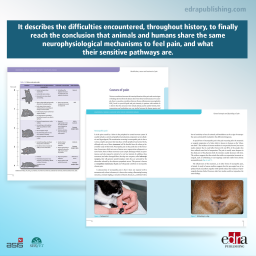


This book deals with pain in companion animals and how it affects their welfare, health and, of course, behaviour. It describes the difficulties encountered, throughout history, to finally reach the conclusion that animals and humans share the same neurophy- siological mechanisms to feel pain, and what their sensitive pathways are. It then goes deeper into the changes that pain can cause in the behaviour of dogs and cats and the tools available to the veterinary surgeon to control it. Good veterinary practice and professional ethics lead us to try to reduce pain in animals as much as possible. Having a book such as this one can help us achieve this objective.
This book deals with pain in companion animals and how it affects their welfare, health and, of course, behaviour. It describes the difficulties encountered to finally reach the conclusion that animals and humans share the same neurophysiological mechanisms to feel pain. It then goes deeper into the changes that pain can cause in the behaviour of dogs and cats and the tools available to the veterinary surgeon to control it.
Data sheet
Specific References
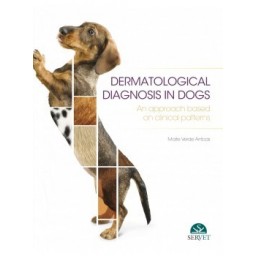
Using a variety of graphical resources, this atlas describes the cutaneous clinical patterns most commonly encountered in dogs (accounting for 90 % of cases seen in veterinary clinics), as well as the associated aetiologies. For each pattern, corresponding guidelines are provided to ensure correct diagnosis. This book has been designed as an educational guide for veterinary practitioners to facilitate the diagnosis of skin diseases. The wealth of graphical material complementing the text provides veterinary surgeons with reference images with which to compare the cases they encounter in the clinic.
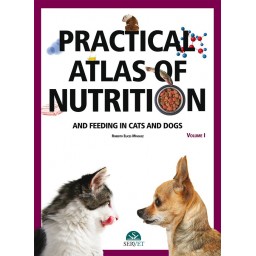
Who said that nutrition is boring? Not in this book! Here we have transformed nutrition into a series of graphic pages, with simple and concise text and several diagrams, drawings and images, by which the veterinarian can see all of the fundamental aspects of nutrition in dogs and cats. From digestive physiology and dietary behavior, the evaluation of body condition and morphometric measurements, to the characterization of the immediate principles and the description of the energy and nutrient requirements, this atlas is a succession of pages with an immense richness in information and visuals that will enable the reader to enjoyably deepen their knowledge about pet nutrition.
Atlases of cytology are an essential tool in small animal practice. Diagnostic cytology, which is used extensively in routine clinical practice, requires the most comprehensive cell identification possible. This is best achieved with the help of numerous images that reflect the most characteristic and distinguishing features of the different cytological patterns, and this book will therefore be of great use to the reader in the diagnostic process of many pathologies.
This new volume of the collection “Small animal surgery” is a selection of the main surgical procedures explained in the previous volumes. The greatest asset of this book is that it is based on high-quality videos, which accompany each of the surgical techniques. These are classified according to the degree of difficulty. This book is the result of the author’s thorough and careful work and is an essential resource both for veterinary professionals in practice and students of veterinary surgery.
This book deals with pain in companion animals and how it affects their welfare, health and, of course, behaviour. It describes the difficulties encountered, throughout history, to finally reach the conclusion that animals and humans share the same neurophy- siological mechanisms to feel pain, and what their sensitive pathways are. It then goes deeper into the changes that pain can cause in the behaviour of dogs and cats and the tools available to the veterinary surgeon to control it. Good veterinary practice and professional ethics lead us to try to reduce pain in animals as much as possible. Having a book such as this one can help us achieve this objective.