
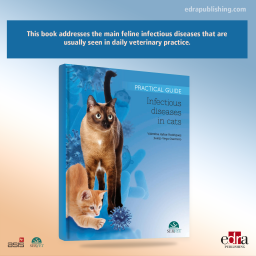
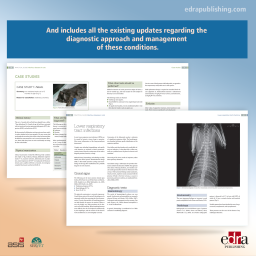
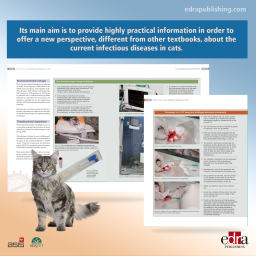
This book addresses the main feline infectious diseases that are usually seen in daily veterinary practice and includes all the existing updates regarding the diagnostic approach and management of these conditions. Its main aim is to provide highly practical information in order to offer a new perspective, different from other textbooks, about the current infectious diseases in cats.
This book addresses the main feline infectious diseases that are usually seen in daily veterinary practice and includes all the existing updates regarding the diagnostic approach and management of these conditions. Its main aim is to provide highly practical information in order to offer a new perspective, different from other textbooks, about the current infectious diseases in cats.
KEY FEATURES:
➜ Rigorous and practical book.
➜ Pleasant reading thanks to pictures, diagrams, tables and clinical cases.
Authors:
VALENTINA AYBAR RODRÍGUEZ
Founding partner of the Hospital Felino Ventas, where, from its beginnings in 1996 until now, she has specialised in feline medicine, with special dedication to internal medicine, infectious diseases, imaging diagnostics and anaesthesia. Member of the international associations of specialists in feline medicine FAB (Feline Advisory Bureau) and ISFM (International Society of Feline Medicine).
JUANJO VEGA GUERRERO
Founding partner of the Hospital Felino Ventas, where, from its beginnings in 1996 until now, he has been treating feline patients exclusively, with special dedication to surgery, orthopaedics, neurology and cardiology. Member of the international associations of specialists in feline medicine FAB (Feline Advisory Bureau) and ISFM (International Society of Feline Medicine).
Table of Contents:
1. Feline panleukopaenia
Aetiology
Pathogenesis and clinical signs
Laboratory diagnosis
Treatment
Prevention
Prognosis
Frequent questions
Case Studies
2. Feline infectious peritonitis
Aetiology and pathogenesis
Diagnostic tests for FIP
Treatment
Immunity and prevention
References
Case studies
3. Upper respiratory tract infections
Clinical signs
Diagnosis
Treatment
Prevention
References
Case studies
4. Lower respiratory tract infections
Clinical signs
Diagnostic tests
LRTI-causing bacteria
LRTI-causing fungi
LRTI-causing viruses
Pyothorax
References
5. Feline immunodeficiency virus
Epidemiology
Pathogenesis
Clinical signs
Diagnosis
Treatment
Vaccination
References
Case studies
6. Feline leukaemia virus
Epidemiology
Pathogenesis
Clinical signs
Diagnosis
Prevention
References
Case studies
7. Intestinal protozoa of cat
Giardia
Tritrichomonas foetus
Toxoplasma gondii
Clinical signs
Cystoisospora
Cryptosporidium felis
References
Recommended reading
8. APPENDICES
Appendix 1. Fluid therapy
Appendix 2. Vascular access routes
Appendix 3. Feeding in critical situations
Appendix 4. Blood transfusion
Appendix 5. Punctures and drainage devices
Appendix 6. Feline oral disease
Appendix 7. When to stop treatment
Appendix 8. Vaccination
Data sheet
Specific References
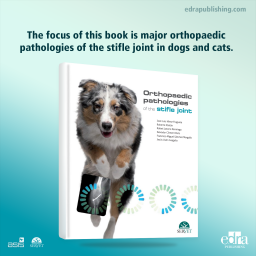
This book deals with the main orthopaedic conditions of the stifle joint in dogs and cats, so veterinary surgeons can assess, diagnose and treat the disorders commonly seen in their practice. It is intended to help veterinary clinicians make a correct diagnosis and prognosis and establish the most appropriate drug or surgical treatment for each case. Orthopaedic pathologies of the stifle joint contains plenty of high-quality images and illustrations as well as links to videos through QR codes, which provide additional information and contribute to making the book even more practical.
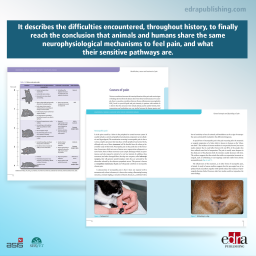
This book deals with pain in companion animals and how it affects their welfare, health and, of course, behaviour. It describes the difficulties encountered, throughout history, to finally reach the conclusion that animals and humans share the same neurophy- siological mechanisms to feel pain, and what their sensitive pathways are. It then goes deeper into the changes that pain can cause in the behaviour of dogs and cats and the tools available to the veterinary surgeon to control it. Good veterinary practice and professional ethics lead us to try to reduce pain in animals as much as possible. Having a book such as this one can help us achieve this objective.
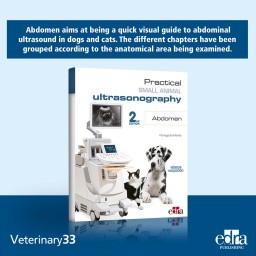
Practical small animal ultrasonography. Abdomen aims at being a quick visual guide to abdominal ultrasound in dogs and cats. The different chapters have been grouped according to the anatomical area being examined. Each chapter contains the technique and normal appearance, examples of variations from normal, and technique exercises where applicable. Quite a few images per chapter and videos with scanning techniques enrich this practical work. 2nd edition includes up-to-date content, a new section on portosystemic shunts and new video.
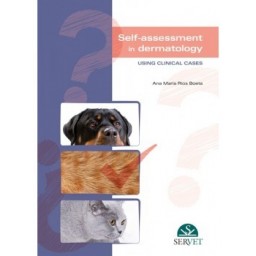
This self-assessment manual allows veterinary surgeons and veterinary students to test their knowledge of small animal dermatology. The book presents a variety of different clinical cases, replete with images of affected patients and relevant data. Based on this information, the reader can identify the disease process in question in a simple and entertaining way, thus refreshing and expanding their knowledge of diagnosis and treatment.
This book addresses the main feline infectious diseases that are usually seen in daily veterinary practice and includes all the existing updates regarding the diagnostic approach and management of these conditions. Its main aim is to provide highly practical information in order to offer a new perspective, different from other textbooks, about the current infectious diseases in cats.