


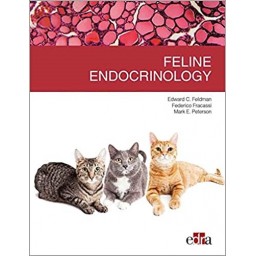


This book is unique, developed by the main worldwide experts in this issue. It is an extremely valuable tool for any veterinary practitioner willing to deepen into physiopathology, clinical signs, diagnosis, treatment and prognosis of feline endocrine diseases, with an approach and contents never published so far. the most common endocrine conditions in cats are deeply discussed and addressed: hyperthyroidism, type-II diabetes mellitus, and growth hormone excess.
Developed by the most renowned experts in this field, this unique and practical handbook of feline endocrinology will be the most valuable tool for small animal veterinarians who want to deepen their understanding on the pathophysiology, clinical signs, diagnosis, treatment, and prognosis of every endocrine condition recognized in cats. Rather than have the authors treating cats as small dogs, a cat-only text will allow fully focused description of conditions in this one species. Allowing these experts in feline endocrinology space to fully teach us what they have learned about cats will result in a superior resource composed of text, figures, boxes, tables, algorithms, and videos (presented on an electronic version of the text).
Author:
Professor Edward C. Feldman
DVM, DACVIM (Small Animal Internal Medicine)
Emeritus Professor of Small Animal Internal Medicine
University of California, Davis, California, USA
Ed Feldman was on the faculty of the School of Veterinary Medicine, University of California, where he was Professor of Small Animal Internal Medicine for more than 35 years. He is now retired after authoring many research studies, book chapters, and books. He has lectured on canine and feline endocrinology to veterinarians throughout the United States and around the world. He is currently continuing to collaborate on projects in Korea, Brazil, Italy, Spain, and the United Kingdom, as well as in the U.S. He is also working on the 9th edition of the Textbook of Veterinary Internal Medicine, due to be published in about 2 years.
Federico Fracassi
DVM, DECVIM-CA (Internal Medicine)
Associate Professor of Small Animal Internal Medicine
Department of Veterinary Medical Sciences
University of Bologna, Italy
Mark E. Peterson
DVM, DACVIM (Small Animal Internal Medicine)
Animal Endocrine Clinic, New York, NY
Adjunct Professor of Medicine
Department of Clinical Sciences
Cornell University, College of Veterinary Medicine
Ithaca, NY, USA
Table of Content:
Section 1 - Hypothalamus and pituitary
1. Pituitary anatomy and physiology
2. GH excess: acromegaly (hypersomatotropism)
3. Other pituitary tumors
4. Pituitary surgery
5. Pituitary irradiation
6. Pituitary GH deficiency and pituitary dwarfism
7. Polyuria, polydipsia and diabetes insipidus
Section 2 - Thyroid gland
8. Thyroid anatomy and physiology
9. Hyperthyroidism: background, etiopathogenesis and changing prevalence of feline thyroid disease
10. Hyperthyroidism: clinical signs and physical examination findings
11. Hyperthyroidism: laboratory diagnosis
12. Thyroid and kidney disease in cats
13. Thyroid imaging
14. Treatment of hyperthyroidism; antithyroid drugs
15. Treatment of hyperthyroidism: surgical thyroidectomy
16. Treatment of hyperthyroidism: radioiodine
17. Treatment of hyperthyroidism: diet
18. Treatment of hyperthyroidism: severe, unresponsive, or recurrent hyperthyroidism
19. Hypothyroidism
Section 3 – Calcium and parathyroid glands
20. Hypercalcemia
21. Feline primary hypoparathyroidism and hypocalcemia
Section 4 – Adrenal glands
22. Adrenal anatomy and physiology
23. Cushing’s syndrome (hypercortisolism)
24. Primary hyperaldosteronism (Conn’s syndrome)
25. Other adrenal cortical tumors and pheochromocytoma
26. Adrenal surgery via open and laparoscopic approaches
27. Feline hypoadrenocorticism
28. Glucocorticoid therapy
Section 5 – Endocrine pancreas
29. Anatomy, histology and physiology of the feline endocrine pancreas
30. Pathogenesis and clinical observations of uncomplicated diabetes mellitus
31. Diabetic ketosis, ketoacidosis, and hyperosmolar syndrome
32. Insulin treatment of diabetes mellitus
33. Gastrointestinal hormones and the use of non-insulin therapies for diabetes mellitus
34. Dietary management for diabetes mellitus
35. Monitoring diabetes in cats
36. Diabetic remission
37. The unstable diabetic
38. Hypoglycemia
Section 6 – Blood pressure, body condition and nutrition
39. Feline obesity
40. Disorders of lipid metabolism
41. Cachexia and sarcopenia
42. Hypertension
Annex
43. Conversion tables
Data sheet
Specific References
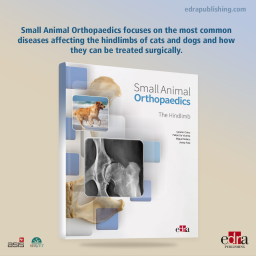
A practical guide detailing surgical treatments for common injuries and diseases in cats and dogs. It covers arthrology, techniques, and procedures with detailed illustrations and videos for enhanced comprehension.
For the beginning veterinary practitioner who wants to delve deeper into trauma and orthopaedic surgery and the veterinary surgeon who is well versed in this field.
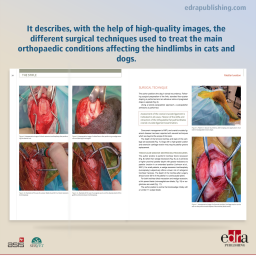
This book describes, with the help of high-quality images, the different surgical techniques used to treat the main orthopaedic conditions affecting the hindlimbs in cats and dogs. Drawing from their experience, the authors provide practical information on how to plan and perform these surgical procedures and how to manage patients postoperatively.
This manual on surgery, gathering 30 clinical cases, provides the reader with a better understanding to perform surgeries in dogs and cats with gastrointestinal disorders. Both simple and complex cases are addressed, detailing patient’s history, physical examination, surgical preparation and technique, as well as additional considerations. It is the intention of the authors of this book to present a series of assorted surgical cases related to the digestive system. Surgical situations of dogs and cats with a more frequent presentation, but because of that none less challenging, will be included. Some less commonly presentations, with their own puzzling demands, will be also addressed.
This book is intended as a practical guide to enable small animal clinical veterinary surgeons and their teams to improve various aspects of their everyday practice: how they understand and relate to patients and clients, how they manage their work, the handling of animals during different procedures, and the implementation of programs to deal with behavioral issues. These aspects will have a highly positive impact on the well-being of the patient, the client, and the veterinary and support staff, with the implementation of smoother and more effective procedures.
This book is unique, developed by the main worldwide experts in this issue. It is an extremely valuable tool for any veterinary practitioner willing to deepen into physiopathology, clinical signs, diagnosis, treatment and prognosis of feline endocrine diseases, with an approach and contents never published so far. the most common endocrine conditions in cats are deeply discussed and addressed: hyperthyroidism, type-II diabetes mellitus, and growth hormone excess.