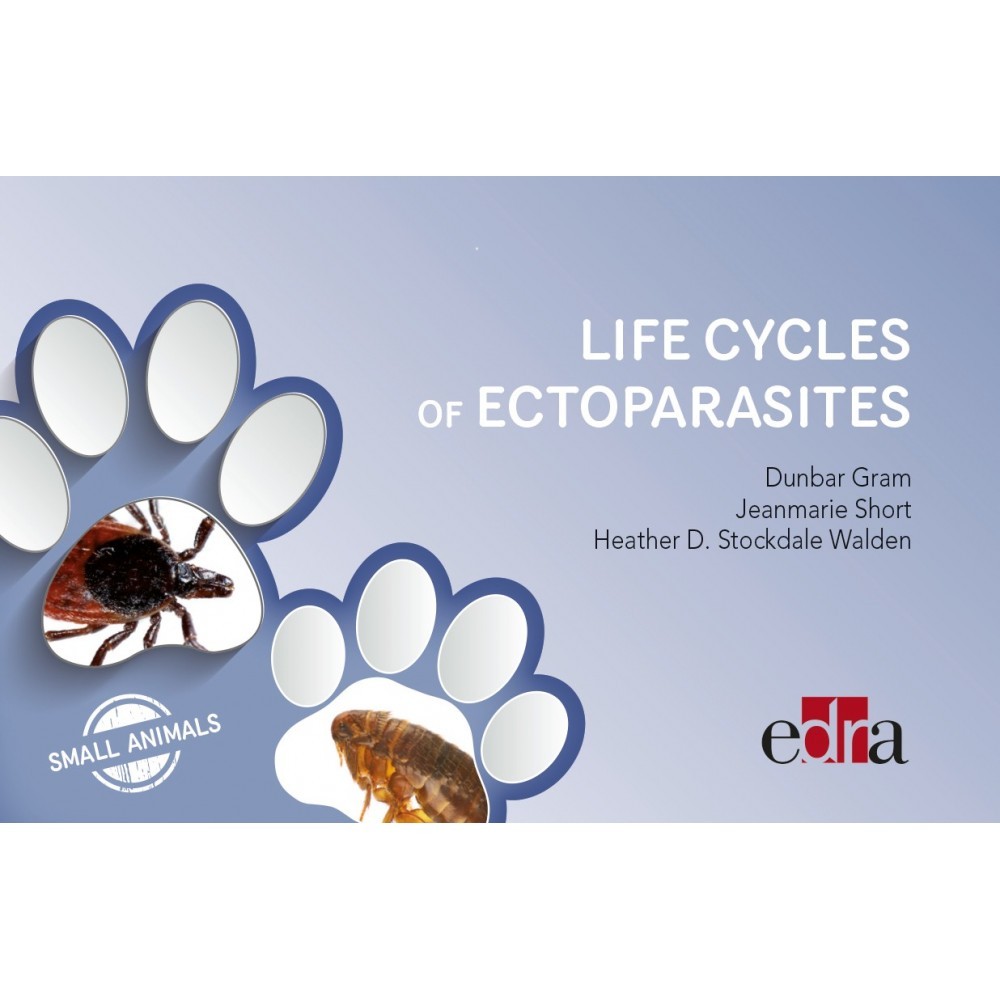

Small handbook gathering all the life cycles of the most common ectoparasites in dogs and cats. Similar parasites are grouped together based on their life cycle and, consequently, their sensitivity to parasiticides. The aim is to provide readers with key aspects of parasite control and prevention, highlighting those diseases that can be transmitted by them. Geographic distribution maps are also included.
Data sheet
Specific References
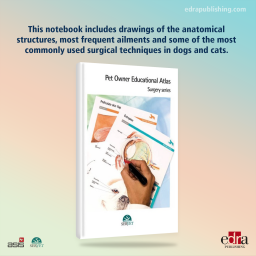
This notebook includes drawings of the anatomical structures, most frequent ailments and some of the most commonly used surgical techniques in dogs and cats. Its purpose is to facilitate communication between vets and their clients, since it will enable them to explain graphically what is happening to the pet, where, and the procedure for the possible resolution of the problem.
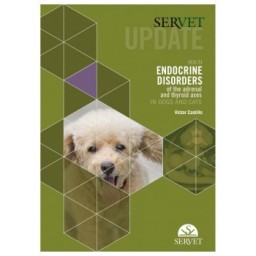
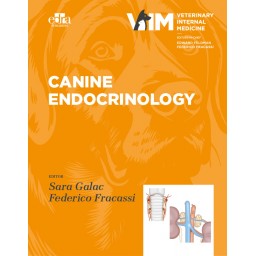
In the fascinating world of endocrinology, scientific knowledge and technology have advanced greatly in recent years. Alongside, the ability to diagnose, treat, and manage various endocrine disorders has progressed too. The goal of this textbook is to provide an up-to-date, comprehensive, yet accessible resource for understanding and managing endocrine disorders in dogs.
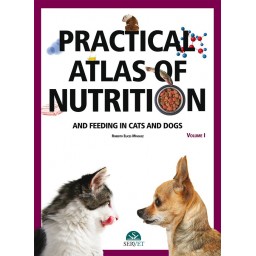
Who said that nutrition is boring? Not in this book! Here we have transformed nutrition into a series of graphic pages, with simple and concise text and several diagrams, drawings and images, by which the veterinarian can see all of the fundamental aspects of nutrition in dogs and cats. From digestive physiology and dietary behavior, the evaluation of body condition and morphometric measurements, to the characterization of the immediate principles and the description of the energy and nutrient requirements, this atlas is a succession of pages with an immense richness in information and visuals that will enable the reader to enjoyably deepen their knowledge about pet nutrition.
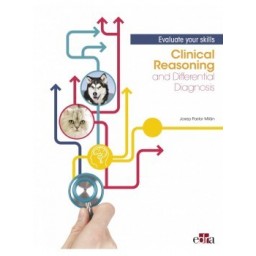
After explaining how clinical reasoning can be applied to identify a patient’s problems, focus on the most relevant issue, and determine its causes, this book describes complex case studies from a physiological and diagnostic perspective. Readers will be asked to answer a series of questions in order to assess their knowledge and acquire the necessary skills for properly establishing a diagnosis.