

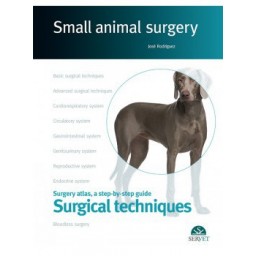

This new volume of the collection “Small animal surgery” is a selection of the main surgical procedures explained in the previous volumes. The greatest asset of this book is that it is based on high-quality videos, which accompany each of the surgical techniques. These are classified according to the degree of difficulty. This book is the result of the author’s thorough and careful work and is an essential resource both for veterinary professionals in practice and students of veterinary surgery.
This new volume of the collection “Small animal surgery” is a selection of the main surgical procedures explained in the previous volumes. The greatest asset of this book is that it is based on high-quality videos, which accompany each of the surgical techniques. These are classified according to the degree of difficulty. This book is the result of the author’s thorough and careful work and is an essential resource both for veterinary professionals in practice and students of veterinary surgery.
Key Features:
- 56 high quality videos
- Practical and visual approach.
Author
José Rodriguez
Tutor in Surgical Pathology and Surgery in the Faculty of Veterinary Medicine of the Universidad de Zaragoza (Zaragoza, Spain). Surgeon at the Hospital Veterinario Valencia Sur (Valencia, Spain). Co-author of the collection Surgery in small animal clinical medicine: surgery images step by step.
Table of contents
1. Excretory urography
2. Preventative hemostasis Hydrodissection
3. Ophthalmic surgery. Entropion.
4. Lumbosacral epiduralanesthesia
5. Urethral catheterization
6. Cystocentesis
7. Percutaneous bladdercatheterization
8. Purse string suture ofthe anus
9. Castration
10. Anal neoplasia
11. Closed sacculectomy
12. Vulval and vaginal neoplasia
13. Rectal prolapse.
14. Laparotomy
15. Liver biopsy
16. Renal biopsy
17. Partial splenectomy
18. Ovariohysterectomy
19. Pyometra / Cystic endometrial hyperplasia
20. Cystotomy
21. Bladder uroliths
22. Ectopic testes
23. Nephrectomy
24. Gastrostomy. Midline laparotomy
25. Gastric dilatationvolvulus syndrome (GDV)
26. Intestinal obstruction due to a non-linear foreign body
27. Enterotomy
28. Enterectomy
29. Intestinal intussusception
30. Colectomy
31. Thoracocentesis
32. Thoracotomy
33. Peritoneal-pericardial diaphragmatic hernia Advanced surgical techniques
34. Ear surgery: ablation of the external ear canal
35. Brachycephalic syndrome
36. Tracheal collapse
37. Urethral stenoses
38. rolapse of the urethral mucosa
39. Thoracoscopy
40. Exploratory laparoscopy and laparoscopic surgery
41. Portosystemic shunt
42. Hepatic surgery: hepatic lobectomy
43. Intramural ureteral ectopy. Ureterocystostomy
44. Extramural ectopic ureter.
45. Neo-ureterocystostomy
46. Esophageal hiatal hernia
47. Megaesophagus
48. Adrenal gland surgery. Adrenalectomy
49. Pheochromocytoma
50. Cardiac tamponade. Pericardiectomy
51. Patent ductus arteriosus (PDA)
52. Perineal hernia
53. Perianal fistulas
Data sheet
Specific References
Fluid therapy is one of the most widely used and necessary therapies for critically ill patients and those who are not able to hydrate and feed themselves spontaneously.
Order now!
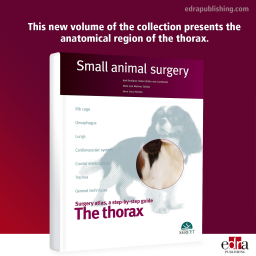
This volume of the collection presents the anatomical region of the thorax. It gives a detailed description of thoracic surgical procedures, ranging from the most common ones, such as thoracotomy, to the most complex ones such as the placement of a transvalvular patch in cases of pulmonary valve stenosis.
This comprehensive guide, born from a profound understanding of the challenges faced by veterinarians, provides an authoritative and readily accessible resource for addressing urgent surgical needs in small animals. Dogs and cats often find themselves in critical situations necessitating swift and precise surgical intervention.
This book reviews, using a highly visual approach, the most common eye disorders and diseases affecting dogs; it includes illustrations, images, and 3D animations to provide veterinary practitioners with a genuine experience of clinical ophthalmology. The content is particularly useful, with concise, comprehensible texts that are supported by the visual material.
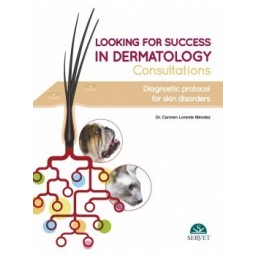
This practical text on small animal dermatology provides the knowledge necessary to successfully diagnose and treat the most common skin diseases, which can account for up to 90% of veterinary consultations. This information is presented together with numerous images as well as a large number of diagnostic algorithms, which add to the practical value of the book.
This new volume of the collection “Small animal surgery” is a selection of the main surgical procedures explained in the previous volumes. The greatest asset of this book is that it is based on high-quality videos, which accompany each of the surgical techniques. These are classified according to the degree of difficulty. This book is the result of the author’s thorough and careful work and is an essential resource both for veterinary professionals in practice and students of veterinary surgery.