

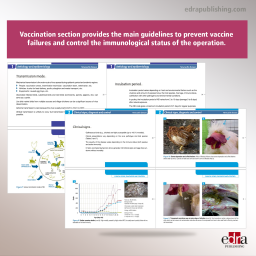


Updated review of Newcastle disease presented in a visual and practical manner. The chapter dedicated to the clinical diagnosis of the disease will surely be of great interest to the reader. The vaccination section provides the main guidelines to prevent vaccine failures and control the immunological status of the operation.
Updated review of Newcastle disease presented in a visual and practical manner. The chapter dedicated to the clinical diagnosis of the disease will surely be of great interest to the reader. Vaccination section provides the main guidelines to prevent vaccine failures and control the immunological status of the operation.
Authors:
Kang-Seuk Choi, DVM, MS, PhD.
OIE (World Organisation for Animal Health) expert for Newcastle disease. Chief of OIE Reference Lab for Newcastle Disease, Avian Disease Division, Animal and Plant Quaratine Agency (QIA). Republic of Korea.
Key Features:
Online visualisation of the sample chapter.
Presentation brochure in PDF format.
Author ́s CV.
Sample chapter compatible with iPad.
Table of Contents:
1. Part 1. Aetiology and
epidemiology
Newcastle disease (ND)
History of the disease
The taxonomy of Newcastle disease
virus (NDV)
Avian paramyxoviruses
Virus morphology
Virus pathotype
Virus genotype
Antigenic variation
Resistance to environment
Hosts of the disease
Outbreak versus control
Current geographical distribution
Transmission mode
Incubation period
Morbidity and mortality
Immunity and protection
2. Part 2. Clinical signs,
diagnosis and control
Clinical signs
History taking
Clinical tentative diagnosis
Differential diagnosis
Sampling and transport
Laboratory diagnostic tests
Identification of virulent viruses
Newcastle disease vaccine
Maternally derived antibody (MDA)
Hatchery vaccination
Field vaccination on farm
Vaccination failure
Biosecurity
Cleaning and disinfection
References
Data sheet
Specific References
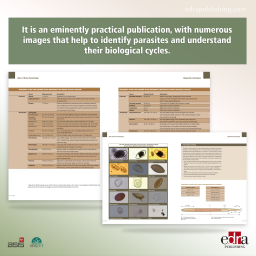
Atlas exclusively dedicated to the most important parasites and parasitoses of sheep. It is an eminently practical publication, with numerous images that help to identify parasites and understand their biological cycles. It includes a chapter on the key diagnostic techniques used to identify adult parasites, eggs and larvae.
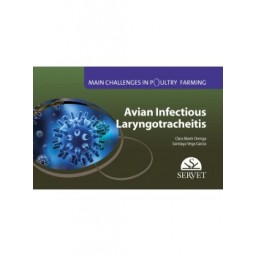
Handbook entirely dedicated to avian infectious laryngotracheitis (ILT), based on a handy and visual approach of the topic. This handbook has been developed by prestigious, highly experienced, and renowned authors, being experts in the area of avian diseases. An up-to-date and complete review has been carried out including the most significant contents, such as etiology, epidemiology, pathogenesis, clinical manifestations, etc. A chapter about vaccination has been properly developed in order to provide the main guidelines to avoid vaccination failures and control its prevalence and incidence.
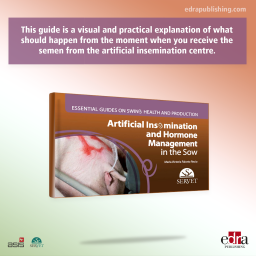
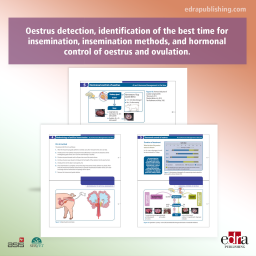
This guide is a visual and practical explanation of what should happen from the moment when you receive the semen from the artificial insemination centre, until the moment when the sow is inseminated, with a focus on the use of refrigerated semen: conservation and management of seminal doses, oestrus detection, identification of the best time for insemination, insemination methods, and hormonal control of oestrus and ovulation.
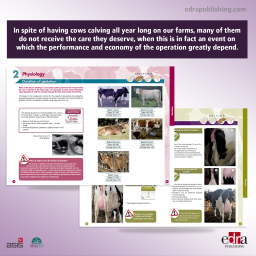
How is the due date estimated? How do we know when the cow begins the prepartum period? When is professional assistance required? These are some of many questions that may arise during calving. For this reason, Servet has decided to publish this book that answers the main questions regarding calving in a simple and easy way. In this original book, you will find the essential features that need to be taken into consideration during gestation, calving and the postpartum period in order to deal with calving successfully, avoid dystocia and increase the survival rate of the calves.
Updated review of Newcastle disease presented in a visual and practical manner. The chapter dedicated to the clinical diagnosis of the disease will surely be of great interest to the reader. The vaccination section provides the main guidelines to prevent vaccine failures and control the immunological status of the operation.