

This book offers essential information about how to obtain samples for routine clinical and pathological investigations veterinarians habitually follow in pig farms. In addition, a complete and easy-to-perform necropsy procedure is shown. Picture galleries illustrate these procedures in a very easy way to follow. The guide also contains a set of pictures representing the main pathologies veterinarians can find in their practice. The guide is very visual and literature is reduced in order to facilitate the use of the book. This design, together with the book format and binding makes this guide very easy to use in practice by veterinarians and farm workers.
This book offers essential information about how to obtain samples for routine clinical and pathological investigations veterinarians habitually follow in pig farms. In addition, a complete and easy-to-perform necropsy procedure is shown. Picture galleries illustrate these procedures in a very easy way to follow. The guide also contains a set of pictures representing the main pathologies veterinarians can find in their practice. The guide is very visual and literature is reduced in order to facilitate the use of the book. This design, together with the book format and binding makes this guide very easy to use in practice by veterinarians and farm workers.
Presentation of the book
The guide is presented in a very handy binding allowing to be used under pig farm conditions. The book is distributed in three parts. First part is dedicated to clinical sampling and is completed with clinical pictures of the main clinical signs of common diseases. Second part describes how to perform a necropsy in a very quick and easy way. Necropsy procedure is splitted in 5 steps and, as a complement, a how to get best samples from histology and microbiology is shown. The last chapter includes a picture collection of common diseases of pigs which readers can use for comparison.
Authors
Marcelo de las Heras
Dr. Marcelo de las Heras graduated in Veterinary Medicine in 1981 and obtained his PhD in 1987. He has been teaching veterinary pathology since 1983 at the University of Zaragoza and currently is a professor of veterinary pathology. He has been the author of several books of necropsy techniques and anatomic pathology in sheep, goats and pigs and published more than 100 papers on scientific journals.
José Antonio García de Jalón
Dr. José A. García de Jalón graduated in Veterinary Medicine in 1979 and obtained his PhD in 1986. He has been teaching veterinary pathology since 1979 in the University of Zaragoza and currently is a professor of veterinary pathology. He has been the author of several books of necropsy techniques and anatomic pathology in sheep, goats and pigs and published more than 110 papers on scientific journals.
Isidoro Pérez Guzmán
Dr. Pérez graduated from the Veterinary Medical School at the University of Zaragoza in 1987. He completed his veterinary studies with a master’s degree in swine production at The Autonomous University of Barcelona (UAB) in 1995 and an advanced studies diploma (DEA) in milk production of sows in 2006. He developed his professional experience at the swine technical services of Cooper Zeltia, Pitman-Moore, Mallinkrodt Pharmaceuticals and Schering-Plough until 2006, and afterwards he became the production manager at Grupo Obanos until present.
Table of Contents
1. Introduction
2. Identification of clinical signs
3. Picture gallery of pig diseases
4. Sampling for clinical procedures
5. Necropsy step by step
6. Sampling for histopathology studies
Data sheet
Specific References
Manuel Fernández Sánchez, author of the best seller The Oestrus Cycle of the Cow. A Photographic Atlas, now brings us his second book Reproduction and ultrasound examination in cattle, published by Servet. It offers a detailed comparison of the uterine and ovarian structures in all phases of the oestrous cycle. This publication is characterized by an original introduction to both photographic and ultrasound images of the different anatomical structures and their pathological conditions. In this way, the author succeeds in simplifying the interpretation of reproductive diagnosis using ultrasound, by guiding the reader and enabling him to visualise the structures on which ultrasonography is performed.
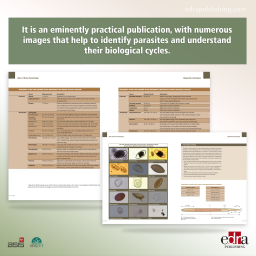
Atlas exclusively dedicated to the most important parasites and parasitoses of sheep. It is an eminently practical publication, with numerous images that help to identify parasites and understand their biological cycles. It includes a chapter on the key diagnostic techniques used to identify adult parasites, eggs and larvae.
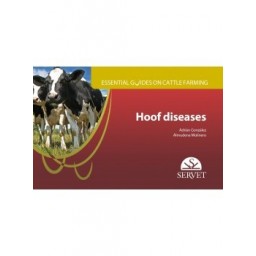
A visual and instructive book written by experts in the field, which shows readers how to analyse the most important characteristics of lameness and the main measures for its control and optimal prevention.
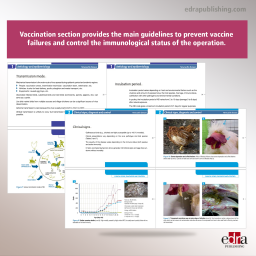
Updated review of Newcastle disease presented in a visual and practical manner. The chapter dedicated to the clinical diagnosis of the disease will surely be of great interest to the reader. The vaccination section provides the main guidelines to prevent vaccine failures and control the immunological status of the operation.
This book offers essential information about how to obtain samples for routine clinical and pathological investigations veterinarians habitually follow in pig farms. In addition, a complete and easy-to-perform necropsy procedure is shown. Picture galleries illustrate these procedures in a very easy way to follow. The guide also contains a set of pictures representing the main pathologies veterinarians can find in their practice. The guide is very visual and literature is reduced in order to facilitate the use of the book. This design, together with the book format and binding makes this guide very easy to use in practice by veterinarians and farm workers.